Africa attracted investment in 2025; the challenge is turning it into broader industrial development – Unctad

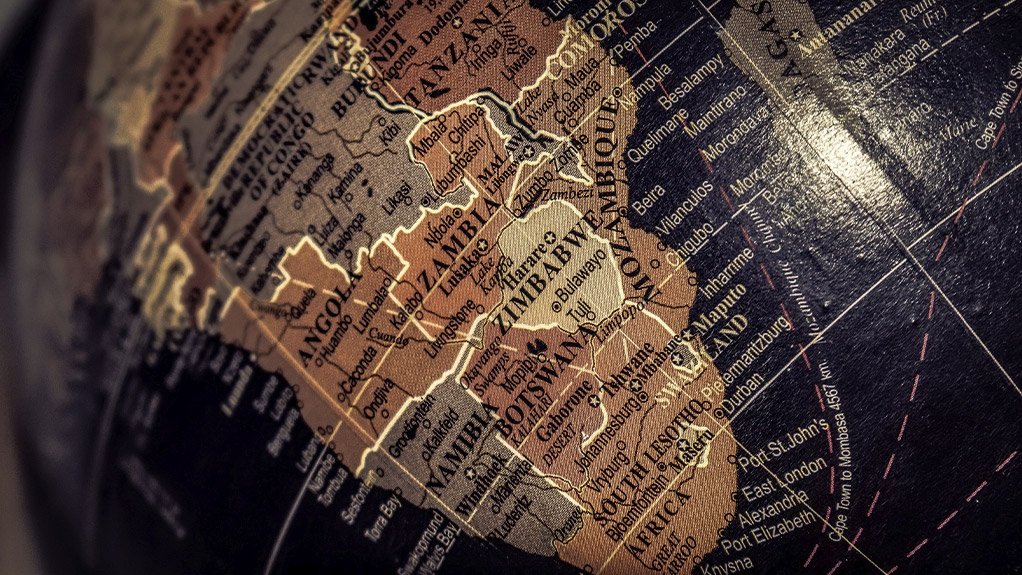



Foreign direct investment (FDI) inflows to Africa reached about $70-billion in 2025, which was below the exceptional $94-billion recorded in 2024, but was the third-highest number since 1990 and remained one-third above the long-term average.
However, the bigger story is that investors continue to position themselves in sectors that are becoming increasingly important to the global economy, UN Trade and Development (Unctad) highlights in its 'World Investment Report 2026'.
Competition for investment is increasingly centred on energy, infrastructure technology and critical resources. Africa continues to attract investor attention, including from the Gulf and Asian economies, but the question is whether that interest can translate into broader economic gains.
African greenfield project values fell by almost one-third, but project numbers increased, which indicates broader engagement through smaller projects.
This suggests companies continue to commit capital to future projects, despite geopolitical tensions, trade policy uncertainty and a more selective global investment environment, says Unctad.
This contrast matters because large transactions can cause sharp swings in yearly FDI figures, as happened in 2024, when a small number of large transactions boosted regional totals.
Greenfield projects often provide a clearer indication of where investors see long-term opportunities, Unctad notes in the report.
Further, Africa’s least developed countries (LDCs) were an important part of the continent’s investment picture and received about $33-billion in FDI during 2025.
However, inflows remained concentrated in a small number of economies linked to natural resources, energy, infrastructure and selected manufacturing projects. Much of that interest is focused on sectors that are becoming more important in the global economy.
This reflects three overlapping drivers, namely demand for energy infrastructure; interest in critical minerals needed for batteries and advanced manufacturing; and the search for new industrial and logistics locations, as supply chains are reconfigured.
Parts of Africa are well positioned to benefit from these trends. The continent holds major reserves of minerals essential for renewable energy technologies, battery manufacturing and advanced industrial production, says Unctad.
Copper, cobalt, lithium, manganese, graphite and rare earth minerals are becoming increasingly important to global investors seeking to secure future supply chains.
Countries such as Egypt, Morocco and South Africa continued to attract investment linked to industrial development, hydrogen production, logistics and renewable energy.
Namibia and other resource-rich economies are drawing attention, as demand rises for minerals needed in batteries, renewable energy systems and advanced manufacturing.
These trends position parts of Africa within some of the fastest-growing segments of global investment.
However, the benefits remain uneven. Investment continues to be concentrated in a relatively small number of countries and sectors, which leaves many economies with limited participation in the activities attracting the most capital.
Meanwhile, for many African economies, attracting investment into energy or resource projects is only the starting point.
The bigger prize lies in capturing more of the value created around those investments through processing, manufacturing, services and stronger regional supply chains.
Achieving that will require infrastructure, skills, industrial capabilities and policies that help connect investment projects to the wider economy.
Unctad says policy priorities include better project preparation, risk-sharing mechanisms, reliable power and transport infrastructure, supplier development, local processing where commercially viable, and regional corridors that connect smaller markets to larger production systems.
Without these links, investment in minerals or energy can raise headline inflows without creating enough domestic value, it emphasises.
“The success of Africa's next development chapter will depend not only on how much investment arrives, but also on how effectively countries can transform that investment into jobs, technology transfer, industrial upgrading and economic diversification.”
GLOBAL TRENDS
The World Investment Report 2026 showed that global FDI showed resilience in 2025, rising by 6% to $1.6-trillion, despite geopolitical tensions, trade policy uncertainty and high financing costs.
However, the increase was driven by swings in flows through major financial centres and investment hubs and by stronger inflows in a limited number of large economies.
Excluding the conduit flows through major European financial centres, global FDI increased by 4%, after two consecutive years of decline.
Investment activity became more selective and more concentrated. Growth was focused on a limited number of host economies and on capital- and technology-intensive sectors, notably digital infrastructure, semiconductors and selected energy-related activities.
The top 20 host economies accounted for more than 80% of global inflows in 2025, which reflects the continued concentration of investment in large markets, advanced economies and financial centres, and investment hubs. The composition of the top 20 recipients shifted only modestly, with developing economies representing half of them.
Project-level indicators point to fragile underlying investment conditions, and cross-border mergers and acquisitions values declined by 7%, despite strong domestic deal-making.
Greenfield project announcements remained close to their 2024 level, but were supported mainly by megaprojects in data centres, oil and gas and semiconductors.
International project finance deals halted a three-year decline, with values rising by 3%, but remained about 25% below the 2021 peak.
FDI remains the largest source of external finance for developing economies, accounting for about half of their total external financing in 2025, ahead of remittances, official development assistance and portfolio flows.
Its development role is distinct through its links to productive capacity, technology transfer and participation in global value chains, Unctad says.
Further, FDI flows to structurally weak and vulnerable economies remained largely confined to a small number of resource-rich countries. While inflows to LDCs increased by 21%, they remained modest in small island developing States, concentrated mainly in tourism, renewable energy and logistics.
Overall, the persistent low share of FDI in LDCs and its skewed distribution highlight the ongoing challenges in mobilising investment for economies with smaller markets, higher perceived risks and weaker integration in high-growth sectors, the organisation says.
Meanwhile, the outlook for FDI for this year is highly uncertain, with significant downside risks. Slower global growth, trade policy uncertainty, geopolitical tensions and conflicts are likely to weigh on investment decisions, leading firms to cancel, suspend or delay projects.
Although strong profits among the largest multinational enterprises could support some investment, productive investment activity is likely to remain subdued and uneven. The strong balance sheets of leading firms may support investment in high-value industries, but risk further concentrating FDI in a narrow set of sectors and locations, Unctad says.
Article Enquiry
Email Article
Save Article
Feedback
To advertise email advertising@creamermedia.co.za or click here
Research Reports
Projects
Latest Multimedia
Latest News
Showroom
ECG provides specialised electrical engineering services to the Mining, Utilities, Materials Handling and Industrial industries, with extensive and...
VISIT SHOWROOM



Announcements
What's On
Subscribe to improve your user experience...
Option 1 (equivalent of R125 a month):
Receive a weekly copy of Creamer Media's Engineering News & Mining Weekly magazine
(print copy for those in South Africa and e-magazine for those outside of South Africa)
Receive daily email newsletters
Access to full search results
Access archive of magazine back copies
Access to Projects in Progress
Access to ONE Research Report of your choice in PDF format
Option 2 (equivalent of R375 a month):
All benefits from Option 1
PLUS
Access to Creamer Media's Research Channel Africa for ALL Research Reports, in PDF format, on various industrial and mining sectors
including Electricity; Water; Energy Transition; Hydrogen; Roads, Rail and Ports; Coal; Gold; Platinum; Battery Metals; etc.
Already a subscriber?
Forgotten your password?
Receive weekly copy of Creamer Media's Engineering News & Mining Weekly magazine (print copy for those in South Africa and e-magazine for those outside of South Africa)
➕
Recieve daily email newsletters
➕
Access to full search results
➕
Access archive of magazine back copies
➕
Access to Projects in Progress
➕
Access to ONE Research Report of your choice in PDF format
RESEARCH CHANNEL AFRICA
R4500 (equivalent of R375 a month)
SUBSCRIBEAll benefits from Option 1
➕
Access to Creamer Media's Research Channel Africa for ALL Research Reports on various industrial and mining sectors, in PDF format, including on:
Electricity
➕
Water
➕
Energy Transition
➕
Hydrogen
➕
Roads, Rail and Ports
➕
Coal
➕
Gold
➕
Platinum
➕
Battery Metals
➕
etc.
Receive all benefits from Option 1 or Option 2 delivered to numerous people at your company
➕
Multiple User names and Passwords for simultaneous log-ins
➕
Intranet integration access to all in your organisation